Cockroach Control
Cockroach Control in Queen Creek, AZ — American Roach & Sewer Roach Elimination
If you’re seeing large roaches in your garage, bathroom, laundry room, or kitchen at night — the kind that scatter when you turn on the light — you’re almost certainly dealing with American cockroaches, also known as sewer roaches or palmetto bugs. These are the most common cockroach species entering Queen Creek homes from outside, and they require a different treatment strategy than the small German roaches that live and breed inside.
American cockroaches thrive in Queen Creek’s desert environment. They live in the sewer system, water meter boxes, irrigation valve boxes, under block walls, in palm trees, and in any warm, moist outdoor structure. They enter homes through weep holes, plumbing drains, garage door gaps, utility penetrations, and foundation cracks — particularly during Arizona’s extreme summer heat when outdoor temperatures drive them to seek cooler, more humid environments indoors.
ProStrike Pest Solutions provides professional cockroach control in Queen Creek, AZ focused on eliminating active indoor populations, treating exterior pressure zones, and closing the entry points that allow roaches to keep getting in. We’re a licensed, family-owned company based locally — we know exactly where American roaches concentrate in East Valley homes and how to stop them.
Cockroach Species Common in Queen Creek, AZ
Identifying the species correctly is the first step to effective treatment. Queen Creek homeowners encounter several cockroach species, each with different habits and entry strategies.
American Cockroach (Periplaneta americana) — Sewer Roach / Palmetto Bug The most common large cockroach in Queen Creek. Adults are 1.5 to 2 inches long, reddish-brown with a yellowish figure-eight pattern on the back of the head. They live primarily outdoors and in sewer systems, entering homes through drains, weep holes, and gaps in the structure. Most active at night — seeing them during the day usually indicates a significant outdoor population pressure or an indoor harborage that has become overcrowded. This is the roach most homeowners in the East Valley are dealing with when they report large roaches in the garage or bathroom.
Turkestan Cockroach (Blatta lateralis) Increasingly common across the East Valley and quickly replacing the Oriental cockroach in many Arizona urban environments. Males are reddish-brown with pale yellow markings along the wing edges; females are darker and broader. Turkestan roaches live outdoors in soil, compost, leaf litter, and irrigation valve boxes — they’re strongly attracted to moist soil and organic debris near the foundation. They enter homes the same way American roaches do and are frequently misidentified as American roaches by homeowners.
Brownbanded Cockroach (Supella longipalpa) Smaller than American roaches — about ½ inch — with distinctive pale bands across the wings. Unlike American roaches, brownbanded cockroaches live and breed indoors, preferring warm, dry areas such as upper cabinets, behind picture frames, inside electronics, and in bedroom furniture. Less common than German or American roaches in Queen Creek but require targeted indoor treatment when present.
German Cockroach (Blattella germanica) The small, fast-reproducing cockroach found in kitchens and bathrooms. If you’re dealing with small roaches in food prep areas, this is a separate and more serious infestation requiring completely different treatment. See our dedicated German roach control service — standard cockroach treatment does not eliminate German roach colonies.
Why American Roaches Are So Common in Queen Creek Homes
Queen Creek’s infrastructure, landscaping, and climate create ideal conditions for large cockroach populations to thrive outdoors — and constant pressure to enter homes:
Sewer system connectivity — American cockroaches live in the municipal sewer system and travel freely through drain pipes into homes through floor drains, toilet base gaps, and sink drains. Homes without proper drain traps or with infrequently used drains that have dried out are particularly vulnerable.
Irrigation infrastructure — Queen Creek’s extensive residential and HOA irrigation systems keep soil moist year-round in landscaping beds, medians, and common areas. Moist soil with organic debris is prime American and Turkestan cockroach habitat directly adjacent to homes.
Block wall construction — The hollow cores of concrete block walls are warm, dark, and protected — ideal harborage for large cockroach populations. Block walls shared with neighboring properties allow cockroaches to move freely across multiple properties.
Weep holes — Required by building code for moisture drainage in block wall and stucco construction, weep holes are also one of the primary entry points for American cockroaches, scorpions, and other pests entering Queen Creek homes. Standard weep holes are completely open and unscreened.
Extreme summer heat — When outdoor temperatures exceed 110°F, American cockroaches actively seek cooler, more humid environments — which means your air-conditioned home. Roach activity inside Queen Creek homes peaks in June and July as outdoor temperatures spike.
Citrus and organic debris — Fallen fruit, decomposing leaves, and organic mulch near the foundation provide food and moisture for large outdoor cockroach populations that then encounter your home’s entry points.
Where Cockroaches Hide and Enter Queen Creek Homes
Primary entry points:
- Weep holes in block walls and stucco at the foundation line
- Floor drains in garages, laundry rooms, and utility areas
- Gaps under and around garage doors — especially side entry doors
- Plumbing pipe penetrations through the slab or foundation
- Gaps around utility lines, conduit, and HVAC lines entering the structure
- Cracks and expansion joints in the foundation and slab
- Roof drain lines and downspout connections near entry points
Common indoor harborage areas:
- Garage baseboards and storage areas, especially near the water heater
- Laundry room floor drains and under the washing machine
- Under bathroom sinks and near toilet bases
- Kitchen under-sink cabinets near plumbing penetrations
- Behind the refrigerator and dishwasher
- In wall voids adjacent to plumbing in heavy infestations
Our Cockroach Control Process in Queen Creek
Step 1 — Full Inspection We inspect the exterior perimeter, garage, and interior zones to identify entry points, harborage areas, and outdoor population pressure sources. We check weep holes, drain access points, landscaping conditions, block walls, and any structural gaps contributing to cockroach entry. Inside, we identify where active roaches are being seen and what conditions are sustaining indoor activity.
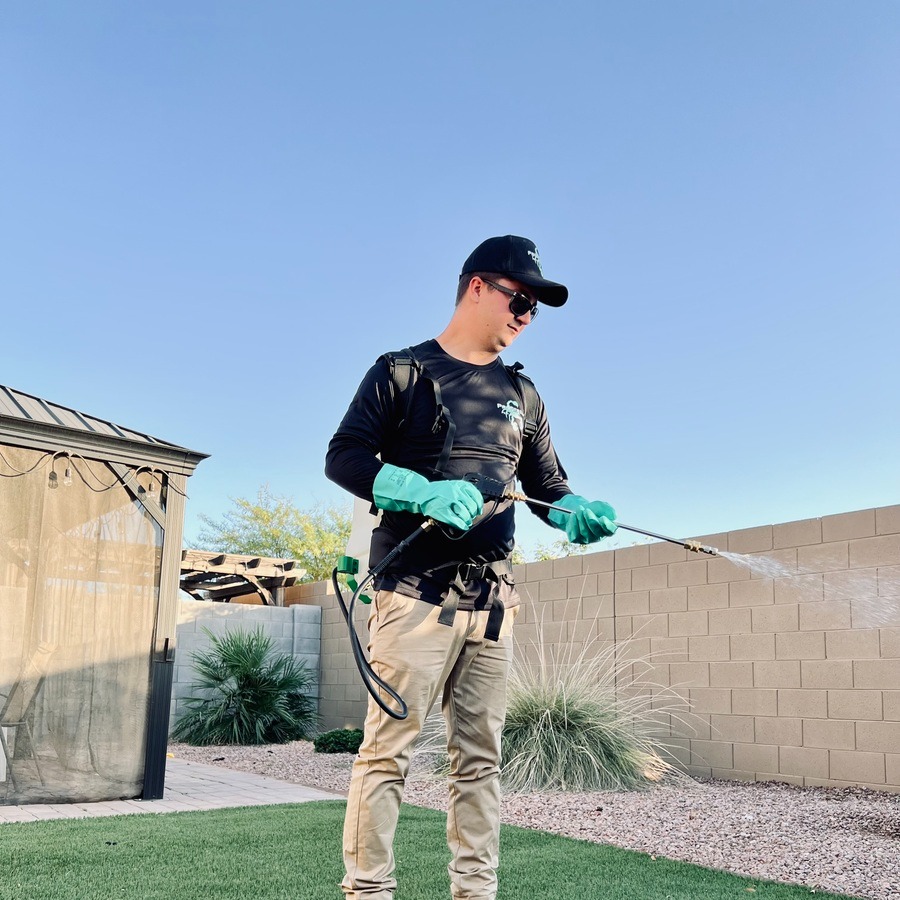
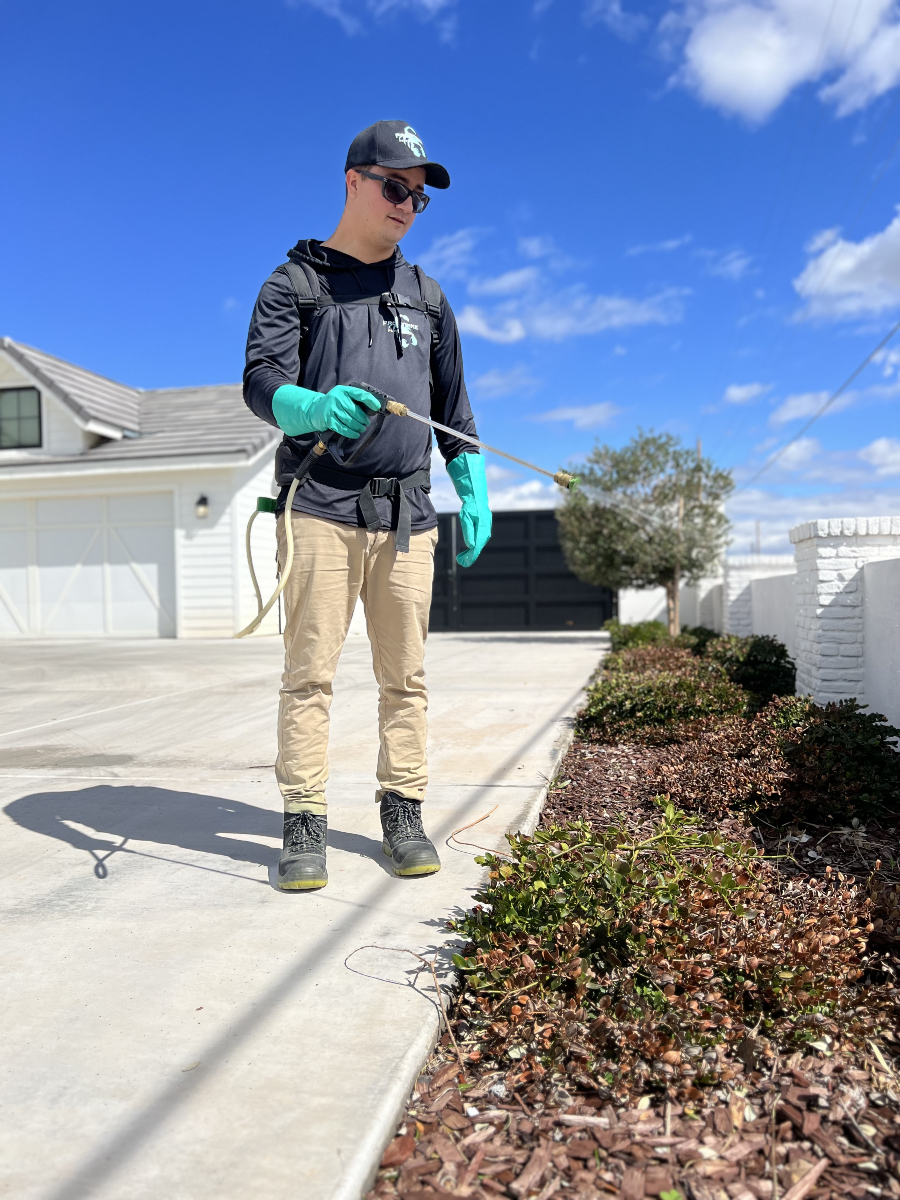
Step 2 — Exterior Perimeter Treatment We apply a professional-grade residual insecticide around the full foundation perimeter, block wall base, entry points, and exterior harborage zones. This creates a contact barrier that eliminates cockroaches crossing from the outdoor population into the structure. We pay specific attention to weep hole areas, garage entries, and landscaping contact points.
Step 3 — Interior Entry Zone Treatment For homes with active interior sightings, we treat the specific entry zones — garage baseboards, under-sink areas, drain access points, and any confirmed entry points. Treatment is targeted and precise, not broadcast throughout living areas.
Step 4 — Entry Point Sealing Recommendations We document every confirmed entry point and provide specific recommendations for sealing them — weep hole screens, door sweep replacement, drain covers, and gap sealing around utility penetrations. Exclusion work is the single most effective long-term strategy for preventing repeat cockroach entry.
Step 5 — Ongoing Protection American cockroach pressure from the surrounding environment is continuous in Queen Creek — the outdoor population doesn’t go away after a single treatment. Consistent bimonthly general pest control service maintains a perimeter barrier that reduces cockroach entry year-round. See our pricing page for plan options that include ongoing cockroach protection.
Get a Free Estimate
Cockroach Prevention Tips for Queen Creek Homeowners
Install weep hole covers — Plastic or stainless steel weep hole covers designed to allow moisture drainage while blocking pest entry are one of the most cost-effective prevention investments a Queen Creek homeowner can make. Available at most home improvement stores.
Keep garage door seals maintained — Replace worn bottom seals and side seals on garage doors. Cockroaches and other pests enter through even small gaps in the door seal, especially at the corners.
Pour water down infrequently used drains — Drain traps must stay filled with water to block sewer access. Floor drains in guest bathrooms, utility sinks, and garage drains that go unused for weeks can dry out, removing the water seal barrier. Pour a cup of water down these drains monthly.
Reduce organic debris near the foundation — Keep mulch beds, leaf litter, and organic debris away from the foundation perimeter. Replace deep wood chip mulch with decomposed granite near the house — it dries quickly and provides less food and shelter for cockroaches.
Seal all utility penetrations — Use expanding foam or appropriate caulk to seal gaps around every pipe, conduit, and wire entering the structure. Pay particular attention to plumbing under sinks where pipes enter through the cabinet floor.
Eliminate outdoor moisture sources — Fix leaking irrigation emitters, adjust drip line placement away from the foundation, and eliminate standing water in any outdoor area near the structure. Reducing moisture reduces the outdoor cockroach population directly adjacent to your home.
Coordinate with your general pest service — Our general pest control service includes perimeter cockroach treatment as part of bimonthly service — keeping your foundation barrier consistent and addressing seasonal pressure spikes automatically.
Cockroach Control FAQs
American roaches (sewer roaches) are large — 1.5 to 2 inches — reddish-brown, and live primarily outdoors. They enter homes from outside through drains and gaps. German roaches are small — ½ inch — tan with dark stripes, and live and breed entirely inside the home. They require completely different treatment. If you have small roaches in your kitchen, see our German roach control service.
Why do I keep seeing large roaches even after spraying? Store-bought sprays treat surfaces but don’t address the outdoor population pressure or the entry points roaches are using. Without treating the exterior perimeter and sealing entry points, new roaches replace the ones killed indoors within days. Professional treatment addresses both the interior population and the exterior source.
American cockroach perimeter control is included in our standard general pest control service. For homes with heavy cockroach pressure requiring targeted entry point treatment and interior service, we offer dedicated cockroach control. See our pricing page for full plan details.
Extreme summer heat drives American cockroaches to seek cooler, humid environments — your air-conditioned home. June and July are peak indoor cockroach activity months in the East Valley as outdoor temperatures routinely exceed 110°F. Maintaining a treated perimeter barrier before summer is the most effective strategy.
Yes. According to the World Health Organization, cockroaches are documented carriers of bacteria including Salmonella, E. coli, and Staphylococcus, and their shed skins and droppings are a documented trigger for asthma and allergic reactions — particularly in children. Professional cockroach control is a legitimate health measure.
Yes. The exterior perimeter and entry point treatments we use for cockroach control overlap significantly with scorpion control treatment. Many Queen Creek homeowners dealing with cockroaches are also experiencing scorpion pressure, and we address both in a combined service visit.
Have more questions? Visit our full FAQ page for answers on scheduling, prep, and what to expect.
Cockroach Control Across the East Valley
ProStrike is based in Queen Creek — our technicians know the specific construction styles, landscaping conditions, and pest pressure patterns across East Valley neighborhoods. We serve:
- Queen Creek
- San Tan Valley
- Gilbert
- Mesa
- Chandler
- Tempe
- Apache Junction
- Phoenix
Ready to Schedule Cockroach Control in Queen Creek?
Stop seeing roaches scatter every time you walk into the garage or flip on the bathroom light. Call or text (602) 691-7718 or use our contact page to schedule a cockroach inspection. We’ll identify the species, find the entry points, treat the pressure zones, and give you a clear plan to keep them out.
Read reviews from Queen Creek homeowners who’ve used ProStrike, or learn more about us and how we work. For small roaches in the kitchen, see our German roach control service. For all other pest concerns, explore our full specialty pest services.