San Tan Valley
Pest Control in San Tan Valley, AZ — Built for the Desert, Proven in the East Valley
San Tan Valley is one of the fastest-growing communities in Arizona — and with that growth comes a pest landscape unlike anywhere else in the East Valley. Your neighborhood sits at the edge of the Sonoran Desert, directly adjacent to the San Tan Mountain Regional Park, active desert washes, and thousands of undeveloped acres that push scorpions, rodents, termites, and other desert pests into established residential zones year-round.
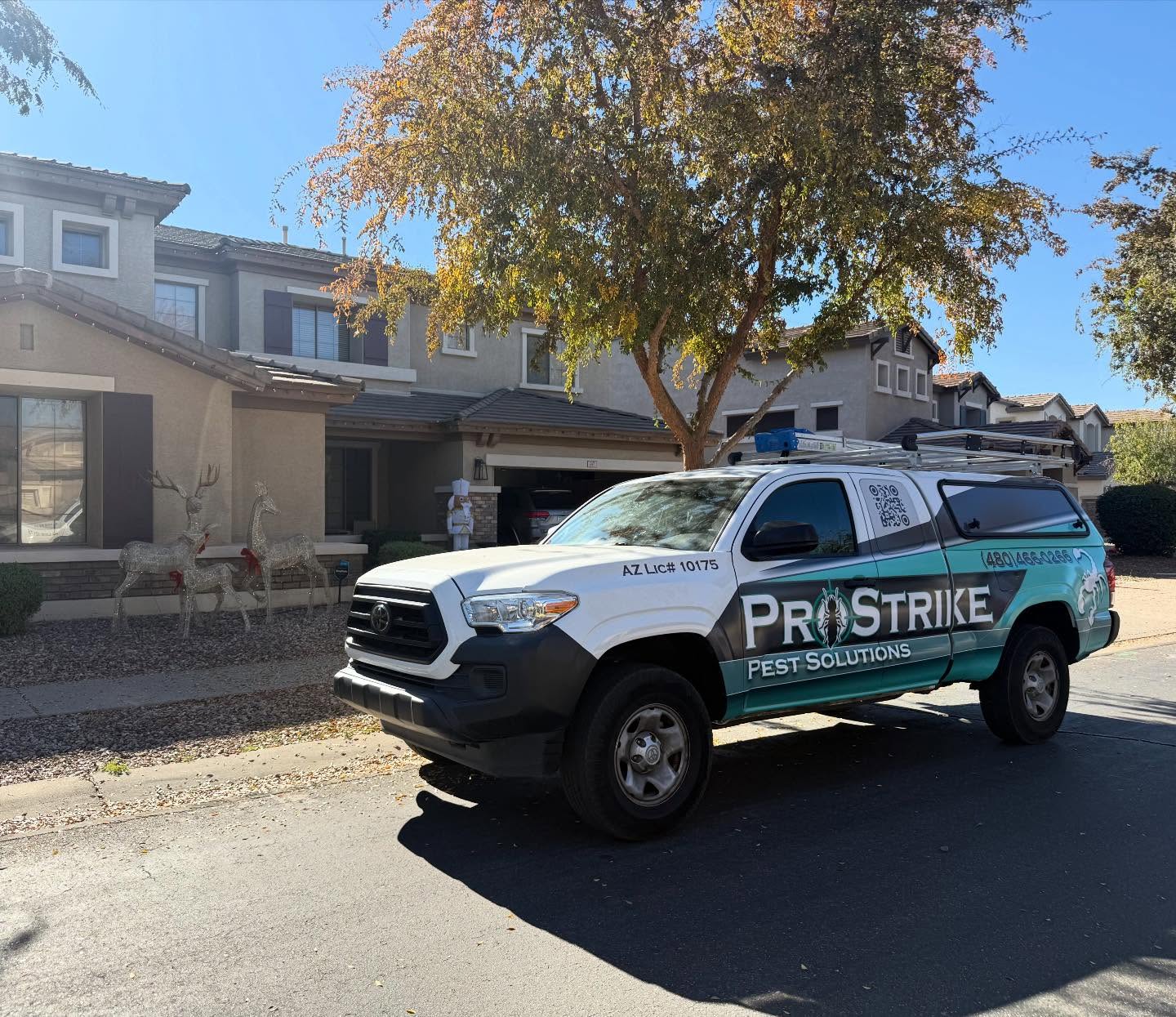
ProStrike Pest Solutions provides pest control in San Tan Valley, AZ built specifically for this environment — with thorough inspections, targeted treatments for each pest species, and prevention guidance that actually reduces long-term pressure. We’re based in Queen Creek, minutes from every San Tan Valley neighborhood. Our technicians service homes along Hunt Highway, Gary Road, Johnson Ranch, and the Combs Road corridor on a regular basis. We hold Arizona pest management license AZ Lic #10175, carry full liability insurance and workers’ compensation, and we publish our pricing online before you call — no surprises.

Why San Tan Valley Has a Unique Pest Problem
Most pest control companies treat San Tan Valley the same as any other East Valley suburb. That’s the wrong approach — and it’s why so many homeowners here cycle through companies without finding one that gets results. Here’s what’s actually driving pest pressure in this community:
The Desert Interface San Tan Valley’s rapid expansion means most neighborhoods border undeveloped desert parcels, natural desert washes, and the San Tan Mountain Regional Park boundary. Arizona bark scorpions, pack rats, and Botta’s pocket gophers routinely migrate from undeveloped land directly into finished neighborhoods along Hunt Highway, Gary Road, Schnepf Road, and the Empire Road corridor. This desert-to-neighborhood movement is continuous and seasonal — it doesn’t stop because your home is new.
Active Construction Zones San Tan Valley still has significant active homebuilding across the community. Construction disturbs ground-nesting pest populations — termites, ants, gophers, and ground-dwelling beetles — and displaces them into adjacent finished homes. If your neighborhood has active builds nearby, your pest risk is elevated regardless of your home’s age.
Irrigation Infrastructure and Monsoon Flooding San Tan Valley’s HOA greenbelts, landscape irrigation systems, and monsoon-season drainage channels create persistent moisture in an otherwise dry desert environment. This moisture sustains mosquito breeding cycles, attracts American cockroaches from sewer infrastructure, and supports subterranean termite colonies well beyond what unirrigated desert land would allow.
Summer Heat Displacement When July and August temperatures reach 110°F, outdoor-dwelling pests move indoors through weep holes, garage doors, and foundation gaps to find cooler environments. American cockroaches, crickets, and spiders are the primary species driven inside during peak summer heat — and the entry points that let them in are often structural features common in San Tan Valley’s newer home designs.
Professional Pest Control In San Tan Valley Services
Every ProStrike service in San Tan Valley begins with a real inspection — not a clipboard walk-around. We identify what pest species are active, where they’re entering, what conditions are sustaining them, and what’s specific to your property. Then we treat. Here’s what we offer:
General Pest Control Our most popular service — bimonthly interior and exterior treatment covering ants, spiders, crickets, earwigs, silverfish, cockroaches, and common household pests. Scorpion protection is included in every visit. We treat the full exterior perimeter, eave line, block wall base, and interior baseboards. See plan pricing.
Scorpion Control The Arizona bark scorpion (Centruroides sculpturatus) is the most medically significant pest in San Tan Valley — the most venomous scorpion in North America and a species that climbs walls, hides in ceiling voids, and delivers stings that require medical attention. Bark scorpion pressure is especially high in San Tan Valley neighborhoods near the park boundary and desert-adjacent lots. Our scorpion service targets block wall harborage zones, landscape beds, eave lines, and interior entry points — a targeted approach focused on where bark scorpions actually live, not just the perimeter.
Termite Inspection & Treatment Desert subterranean termites (Heterotermes aureus) swarm across San Tan Valley from late January through April, typically following the first warm rains of the year. Swarmers — winged termites emerging from soil near your foundation — indicate a colony is already established. The University of Arizona Cooperative Extension identifies subterranean termites as Arizona’s most destructive structural pest. We conduct full inspections, issue WDI reports for real estate transactions, and provide liquid barrier treatment, bait station installation, and targeted wood treatment.
Rodent Control San Tan Valley’s desert interface makes it one of the highest-pressure rodent areas in the East Valley. Roof rats (Rattus rattus) are most active October through March, entering homes through roofline gaps, utility penetrations, and attic vents — then nesting inside before being discovered by the sound of overnight scratching. Pack rats build nest structures around block walls, outdoor equipment, and vehicle undercarriages year-round. House mice establish indoors in any season. Our rodent service covers full inspection, targeted elimination, entry point documentation, and exclusion guidance — not just bait stations placed at the garage door.
Mosquito Control San Tan Valley’s irrigation infrastructure and monsoon-season drainage turns the community into active mosquito breeding habitat from July through October. Culex mosquitoes — the primary West Nile virus vector in Arizona — can complete a full breeding cycle in as little as seven to ten days in standing water. Maricopa County Vector Control tracks West Nile activity across the region. We treat active breeding sources with larvicide and knock down adult populations in vegetation resting zones so you can use your yard through the entire monsoon season.
German Roach Control German roaches (Blattella germanica) are the hardest roach infestation to eliminate. They reproduce rapidly, nest deep inside appliance motors and cabinet seams, and actively scatter away from spray treatments — making most over-the-counter and spray-based approaches counterproductive. Professional gel bait and IGR (insect growth regulator) placed directly at nesting sites is the only method that reliably eliminates a German roach infestation. We treat the source, not just the visible roaches.
Cockroach Control American roaches and Turkestan roaches are outdoor-origin species that enter San Tan Valley homes through weep holes, floor drains, and foundation gaps — especially during extreme summer heat. These species require exterior perimeter pressure treatment and structural entry point management, not the interior gel bait used for German roaches.
Live Bee Removal Africanized honey bees established across Arizona in the early 1990s and now dominate the feral bee population in San Tan Valley. They nest in block wall voids, roof soffits, eaves, irrigation meter boxes, and structure voids — often establishing colonies of 20,000 to 80,000 bees before being noticed. Complete removal including comb and honey extraction is essential: residual honey melts through drywall in summer heat, causes structural damage, and leaves a scent attractant that draws new swarms back to the same location for years. The University of Arizona Extension documents this swarm re-attraction pattern clearly. Call immediately if you find an active colony — do not seal the entry point and do not spray.
Gopher Control Botta’s Pocket Gophers (Thomomys bottae) are active year-round in San Tan Valley, tunneling 6 to 18 inches below ground through lawns, landscape beds, drip irrigation lines, and hardscape areas. Surface repellents, flooding, and vibration devices are ineffective per UC Agriculture & Natural Resources IPM research. The only reliable solution is direct trapping or baiting inside the active main tunnel. We locate the main tunnel by probe, place treatment inside it, and follow up to confirm full elimination.
Local Neighborhoods We Serve with Pest Control In San Tan Valley
ProStrike services all San Tan Valley neighborhoods across ZIP codes 85140 and 85143. We’re in this community regularly — not routing calls from another city.
Established Communities: Johnson Ranch · San Tan Ranch · Ironwood Crossing · Bella Vista Farms · Rancho Bella Vista · Skyline Ranch · Castlegate · Pecan Creek · Pecan Creek South · Sun Groves · Sterling Grove · Olive Mill · San Tan Foothills · Wayne Ranch · Trailside Village · Moon Shadow · Links Estates · Copper Basin
Active Growth Areas: Hunt Highway corridor · Gary Road corridor · Schnepf Road area · Combs Road / Queen Creek Road boundary zone · Empire Road developments · Johnson Road corridor · Magma Road area · Riggs Road corridor
ZIP Codes Served: 85140 · 85143
Not sure if your address is in our service area? Call or text (602) 691-7718 — we confirm immediately and can typically schedule same-day for urgent situations.
San Tan Valley Seasonal Pest Calendar — What's Active & When
No other pest control company tells you this clearly: pest activity in San Tan Valley follows a predictable seasonal pattern. Knowing what’s coming — before you see it — is how you stay ahead of it.
January – February: Termite Swarms Begin, Roof Rats Peak Soil temperatures in San Tan Valley begin warming in late January, triggering the first desert subterranean termite swarms of the season. If you find piles of small wings near windowsills or see winged insects emerging from the soil, a colony is almost certainly established. Schedule a termite inspection now — before swarming peaks in March. Roof rats remain active in attics and citrus trees through February.
March – May: Scorpion Season Opens, Bee Swarms Peak Bark scorpion activity increases sharply as nighttime temperatures rise above 70°F. Stinging incidents spike in March and remain elevated through October — but spring is when scorpions first push from desert harborage into residential areas en masse. March through May is also peak bee swarm season — Africanized colonies split and establish in new nesting sites across San Tan Valley neighborhoods. Book scorpion control and live bee removal early in this window.
June – August: Peak Heat, Cockroaches & Monsoon Mosquitoes Extreme heat drives American cockroaches out of outdoor sewer and soil environments and into air-conditioned homes through weep holes and floor drains. Monsoon onset in early July creates immediate mosquito breeding conditions across drainage corridors and landscape areas. Cockroach control and mosquito control are the priority services June through August.
September – October: Scorpion Activity Peaks Warm monsoon-season nights and abundant prey insects keep bark scorpion activity at its highest point. October is statistically the most active month for scorpion encounters inside San Tan Valley homes. Second annual bee swarm season runs through October. Mosquito populations stay elevated through September. Scorpion control is critical during this period.
November – March: Rodent Season As nighttime temperatures drop below 65°F, roof rats move from outdoor food sources into attic and wall void nesting sites. This is the highest-demand period for rodent control across San Tan Valley. Pack rats increase activity around block walls and outdoor storage areas through the winter months.
Get a Free Estimate
How ProStrike Service Works — Start to Finish
Step 1 — Real Inspection First We inspect before we treat — every single visit. We identify what’s active, where it’s entering, what harborage conditions exist, and what’s specific to your property layout. Desert-adjacent homes near the park boundary get a different inspection focus than homes in dense HOA communities with mature landscaping.
Step 2 — Interior & Exterior Treatment We treat inside and out on every visit. Interior baseboards, entry points, and problem zones. Exterior perimeter, block wall base, eave line, and identified harborage areas. Treatment is based on what we find — not a standard route.
Step 3 — Prevention Guidance Every Visit We walk through the specific conditions at your property that are driving pest pressure — harborage zones, moisture sources, entry points, landscaping factors. Small property-level changes between service visits produce measurably better long-term results.
Step 4 — Bimonthly Ongoing Protection Pest pressure in San Tan Valley never stops — it shifts between seasons. Bimonthly service (every other month, billed monthly) maintains a continuous protective barrier adapted to each season’s pest activity. Compare all plan options and pricing.
Frequently Asked Questions — San Tan Valley Pest Control
What pests are most common in San Tan Valley, AZ? The most frequent service calls we receive from San Tan Valley homeowners are for scorpions (March–October), termites (year-round), roof rats (October–March), American cockroaches (June–August), ants, spiders, and crickets. Gopher, mosquito, German roach, and bee removal calls are also common in specific seasons.
Yes. Scorpion protection is included in every general pest plan. For homes with heavy scorpion pressure — particularly those near the San Tan Mountain Regional Park or on desert-adjacent lots — our dedicated scorpion control service adds targeted harborage zone treatment beyond standard perimeter coverage.
Yes, when available. For urgent situations — active bee colonies, scorpions inside, or rodent activity — call or text (602) 691-7718 and we will respond as fast as possible.
ProStrike publishes pricing online. See our full pricing page before you call — no surprises at the door.
Yes. We use EPA-registered products applied by a licensed Arizona technician. We follow all label guidelines and walk you through any precautions specific to your home.
How far is ProStrike from San Tan Valley? We’re based in Queen Creek, directly adjacent to San Tan Valley — typically 10–15 minutes from most San Tan Valley neighborhoods. We’re not routing your call from Gilbert or Phoenix.
Helpful Next Steps
If you’re seeing scorpions, start with our scorpion Control Service. If you want plan details, visit Pricing. For termite concerns, visit Termite Services.
Serving the East Valley
We’re based right here in Queen Creek, but our trucks cover the entire East Valley. We know exactly what desert pests you’re dealing with because we live here too.
- Queen Creek
- San Tan Valley
- Gilbert
- Mesa
- Chandler
- Tempe
- Apache Junction
- Phoenix
- Maricopa